 Sign in
Talking about emotions
In times of war and crisis, it's important to talk with children about the emotions raging in their hearts. Even though they're little, they feel and experience much more than we can imagine. In this article we'll look at emotions and how to mediate them for children.
Why is it important to talk with children about emotions?
When our child knows what to call what’s going on in his heart, that alone will calm him. Because knowledge is power!
Sometimes all that's needed is reflecting the emotion. For example: "I see you're really sad / angry / disappointed." First of all there's a statement here – I notice what you're going through. You're not invisible. Our secondary benefit is emotional regulation – I'll explain to you what what you're feeling is called, and that will calm you down.
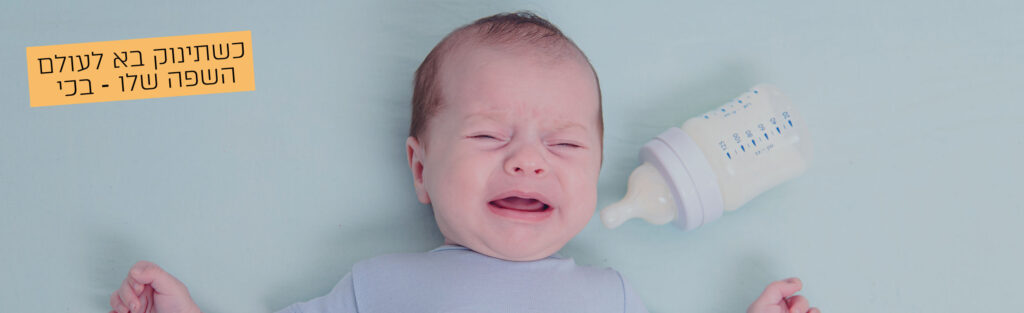
When a baby comes into the world, his language is crying.
When he feels alone, he cries. When his tummy hurts, he cries. When he’s hungry, he cries. When he’s tired, he cries.
What does a wise mother do?
She tells him: Oh, sweetie. Does your tummy hurt? Here, Imma will fold your legs and the gas will come out.
Sweetheart, are you hungry? Imma is bringing you food right now.
Are you tired? Come, tzaddik, to bed. Now we’re going to sleep.
That’s how she regulates him and he calms down.
It’s important to talk to children at their eye level and treat them like little people. They understand everything!
This topic is important at all times, but it has double the importance in times of war or crisis.
The most critical thing is to normalize the emotion: it makes total sense and it's normal that you feel fear / anxiety / helplessness. Because in an abnormal situation, every emotion is normal!
But in ordinary times too, it's important to validate emotions – to agree that your child is allowed to feel what he feels and say: "If someone did that to me, I'd feel that way too."
When a child feels his emotions are legitimate, the level of frustration and anger drops dramatically!
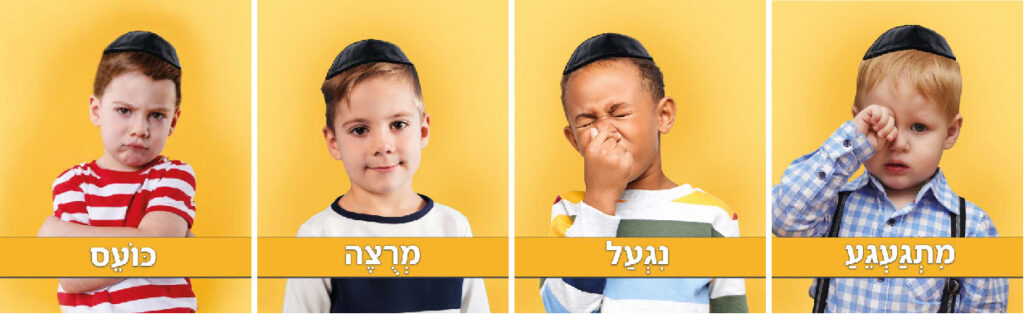
Stages in working on emotions:
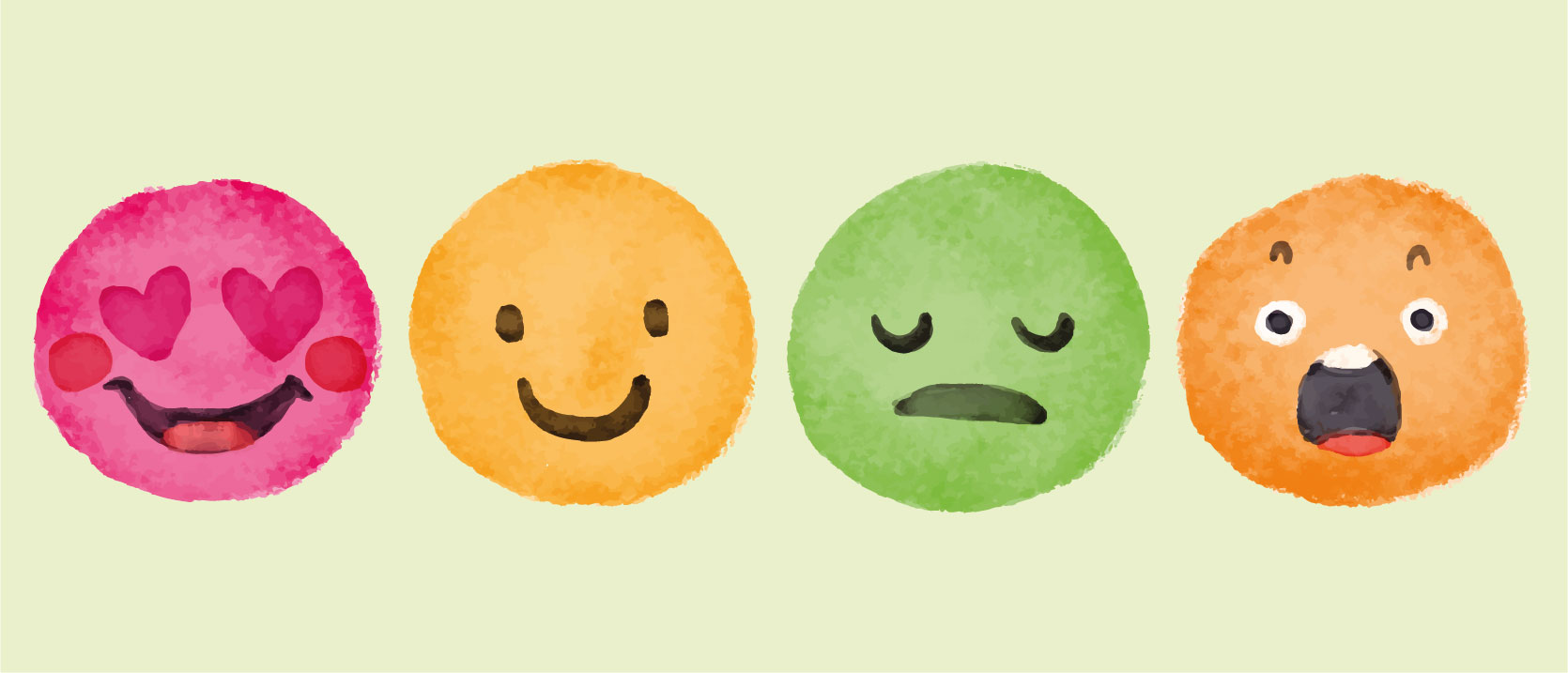
- Naming emotions – giving the emotion a name (there's a lot more than happy and sad…). Show a board with all kinds of faces, or emoji dolls – tell a story about each emotion and ask the children who felt that way in the past week.
- Divide emotions into pleasant and unpleasant ones. You'll be surprised, but there are emotions you'll discuss together to decide whether they're pleasant or not. For example: missing someone.
- Explain that there’s no good emotion or bad emotion, and you can’t argue with someone about their feelings.
First I stop and listen to myself – what am I feeling – and then I can control the emotion instead of it controlling me.
4 game ideas about emotions:
- The children walk around the room. When I say the name of an emotion, everyone has to stop and put on the facial expression that matches it.
- Holding hands in a circle, each one "passes" an emotion to the next + says what he feels. For example: the child tells the friend next to him, "Today I'm happy" with a happy face, and the next child repeats it, and so on.
- One of the children leaves the room, and meanwhile we decide which emotion we'll act out with our faces. When the child comes back in, he has to figure out which emotion we chose.
- In this game we work on the intensity of emotion. We use a scale going up and down, where 1 is the weakest emotion and 3 the strongest. Depending on the level we choose, the child expresses the emotion at that level. For example: angry level 1 – the child frowns and makes an angry face; angry level 3 – the child grinds his teeth in anger.
Stories about emotions:
From Uri’s / Imma’s heart. Highly recommended!
A song I wrote – "Everyone's in My Heart" – while listening to the song, color each emotion in a matching color. You can contact me to buy the song.
Shulamit Orlanchik | Multidisciplinary psychotherapist.
s3182247@gmail.com | 0533182247