 Sign in
The magic of a story
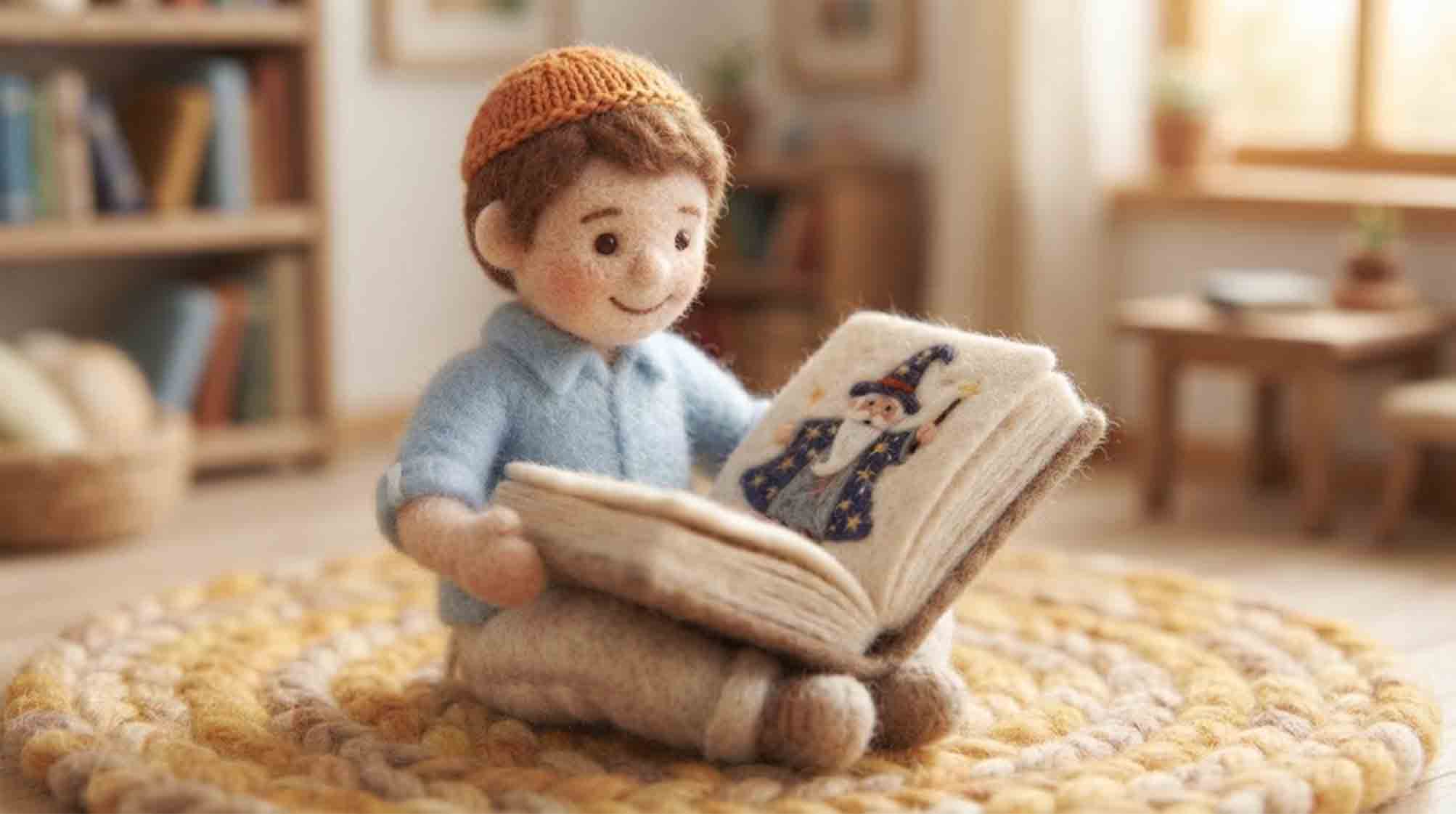
I remember once sitting in on a student teacher's evaluation lesson. The sweet trainee had put so much into it. The lesson was built to perfection. Colorful visual aids stuck on with sticky tack (does that still exist?), activities, interesting questions. All by the book.
And then she told a story.
One story, out of a whole lesson plan.
The voice was improvised. The words were dry.
Suddenly there were whispers, and a crumpled note flew from one end of the classroom to the other.
A good story isn’t a recitation. It’s an experience.
A good story is one that doesn’t end the moment the book closes, but keeps going, in the children’s hearts.
A good story is a performance.
You’re the director. You’re the performer.
So how do you do it? How do you turn story time into a living, breathing experience that stays with the children long after the day is over?
I’ve gathered four practical steps for a successful story.
Let’s begin.
⭐ When the teacher becomes a magician (preparation)
The real magic of a story doesn’t begin when we open the book in front of the children. It begins earlier.
Choose a story that speaks to you: if the story touches your heart, the excitement will pass naturally to the children. Nothing replaces a story you yourself feel connected to.
The book is your stage: look for a story with clear, eye-catching illustrations. Make sure the pictures can be seen from every corner of the room.
(If the story you’re telling has no illustrations, skip this step; it only matters when the story comes with illustrations.)
Tip: plan two or three new words in advance that you want to introduce during the reading. When you weave words like these into the middle of a story, you open a window to new vocabulary while the children don't even feel they're learning.
⭐ The language of magic – voice and movement
The way you tell the story matters no less than the words themselves. Body language and tones of voice are the living translation of the text:
Vary your voice: match your tone to the different characters. A gentle character's voice will be soft and light, while another character's voice will be fuller and deeper. There's no need for overly dramatic impressions; a small, subtle change in your tone is enough for the children to understand right away who is speaking.
The power of silence: the best way to create real suspense and interest is simply to pause for a moment. The little silence before the surprising turn in the story works wonders for the children's attention and keeps them in healthy suspense.
Movement and body language: is the character happy? Be happy with them! Is the character worried? Wrinkle your forehead a little. Your body language is the mirror that shows the children what's happening in the characters' emotional world.
Tip: if the book has no illustrations (and even if it does!), a small tangible prop like a special hat, a blanket or an object that goes with the main character makes the imagination real and draws the children one step deeper into the plot.
⭐ How to turn words into memories (internalizing)
A good story is a great opportunity to internalize new concepts and connect them to the children’s world:
Pause to explain new words: when a rich word comes up in the text, stop for a moment and explain it simply, at the children's level.
Repeated lines as a background tune: if there's a key sentence that repeats in the story, turn it into a shared chorus that all the children say together with you.
Connect it to real life: right after the story, link the message to how things work in your preschool: "Remember how the children in the story worked together? Now when we build a block tower, let's do it just like in the story!"
⭐ From story to emotional tool
A story is a natural mirror for emotions, and it lets children process feelings safely:
Name the feeling: stop at the point where a character experiences a strong emotion. Gently ask the children: "How do you think the character feels now?" Make room for words like joy, excitement, fear, missing someone.
Validation at eye level: no unnecessary drama and nothing heavy – once the children recognize the feeling, highlight how the character coped with it and pass on the reassuring message: "It happens to all of us, and that's completely okay."
The right story is a gentle, natural gateway to the children’s emotional world, letting you touch the right places in the heart without weighing them down.
💖
Which idea or technique from these steps do you most enjoy using in your gan?