
 Sign in
Games from the old days

Getting children involved in group games is a wonderful way to promote the development of social skills while having fun and staying active.
These games give children opportunities to communicate, cooperate and learn important social lessons through play, such as how to resolve conflicts, negotiate, and handle winning and losing in a good spirit.
Remember the days when all we needed to keep ourselves entertained was a bunch of friends and a little imagination? Let's go back to childhood and reconnect with the classic games we all loved!
I’ve gathered a short list for you of games we used to play.
I hope you'll find it valuable 🙂
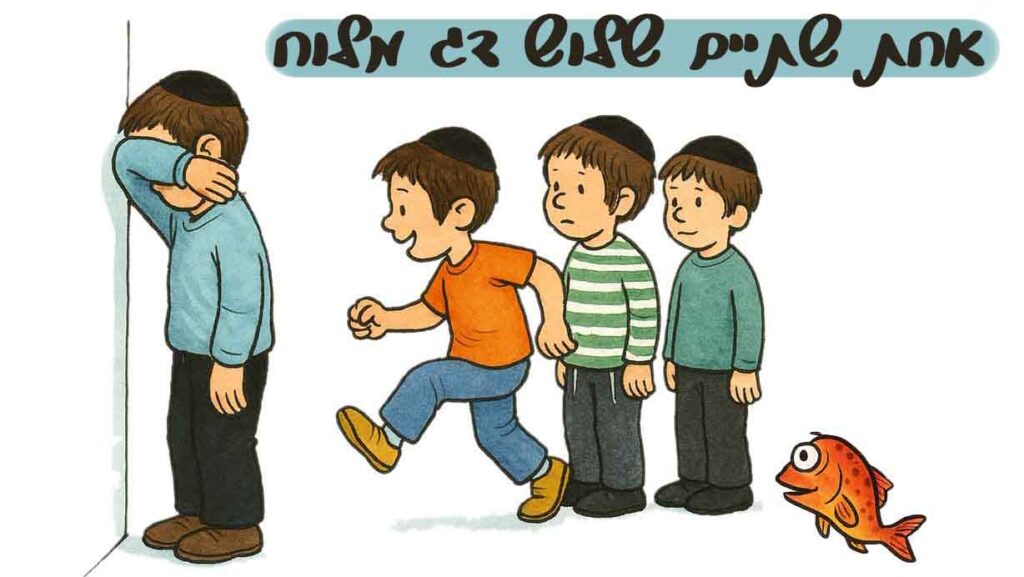
One, two, three, salted fish (Red Light, Green Light)
What do you need to prepare? An open space
Learning goals: balance, reaction speed, self-control.
How to play:
- Decide in advance on a starting point and a finish point.
- One player is chosen to be the “salted fish”. He stands at the finish point while the other players are at the starting point.
- The "salted fish" turns around or closes their eyes and counts "one, two, three, salted fish." Meanwhile, the other players have to move toward them.
- At the end of the phrase, the "salted fish" opens their eyes and all the players freeze in place. If they see someone moving, they send that player back to the starting point.
- Continue until one of the players reaches the finish line.
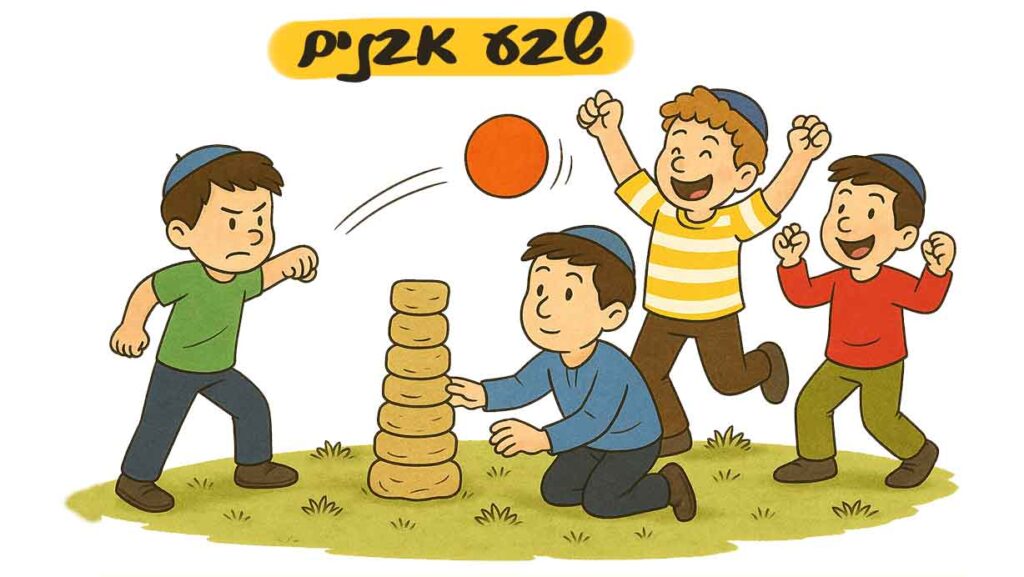
Seven stones
What to prepare in advance: an open, level space, seven flat stones that can be stacked on top of each other, a small soft ball.
Learning goals: concentration, agility.
How to play:
- Build a tower out of the seven stones. Divide the players into two teams. Team A stands a few steps from the stone tower, and Team B stands behind the tower in a semicircle.
- A player from team A tries to knock down the tower with the ball. The aim is to knock down as few stones as possible.
- The children on Team A try to rebuild the tower while the children on Team B try to get them out by throwing the ball.
- If Team A finishes rebuilding the tower, they win. And if Team B gets all of Team A's players out, they win.
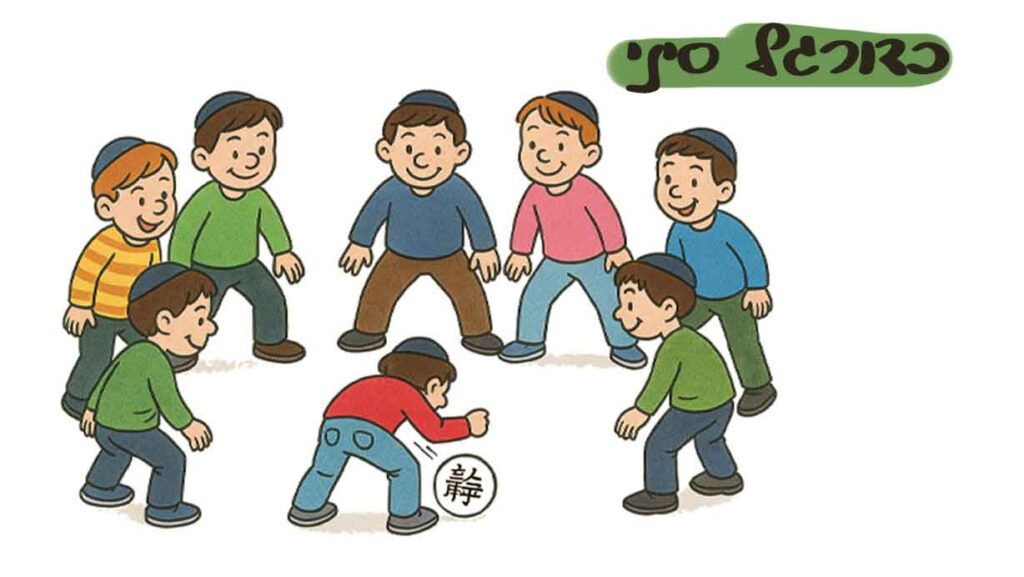
Chinese football
What do you need to prepare? A playing field, a ball
Learning goals: coordination, concentration
How to play:
- The children stand in a circle with their legs apart, so that their feet touch their neighbors’ feet.
- The goal is the space between each player’s legs.
- Each player’s aim is to stop the ball from passing through his goal and to score as many “goals” as possible in the other goals.
- The participants roll the ball with their palm or fist.
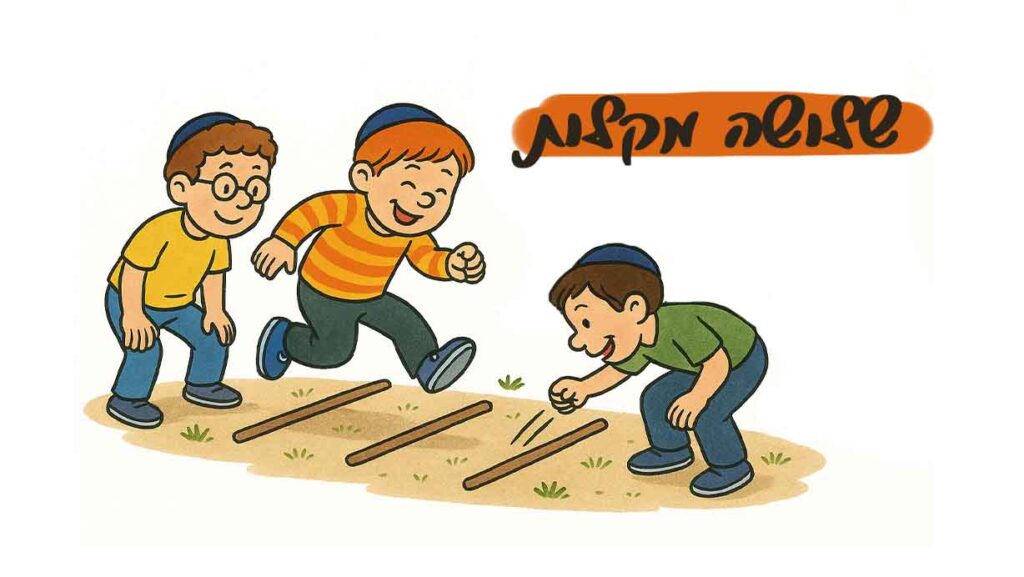
Three sticks
What do you need to prepare? Sandy ground, three sticks
Learning goals: long-jump practice, speed
How to play:
- Arrange the sticks one step apart from each other.
- The players stand in a line in front of the first stick.
- Each player in turn jumps between the sticks without touching them.
- A player who doesn’t reach the third stick, or steps twice in the space between sticks, is out.
- After the last player has hopped between the sticks, the last jumper moves the third stick farther away, and the middle stick accordingly (the distance is set by how far he jumped).
- Start jumping again from the beginning at the new distance.
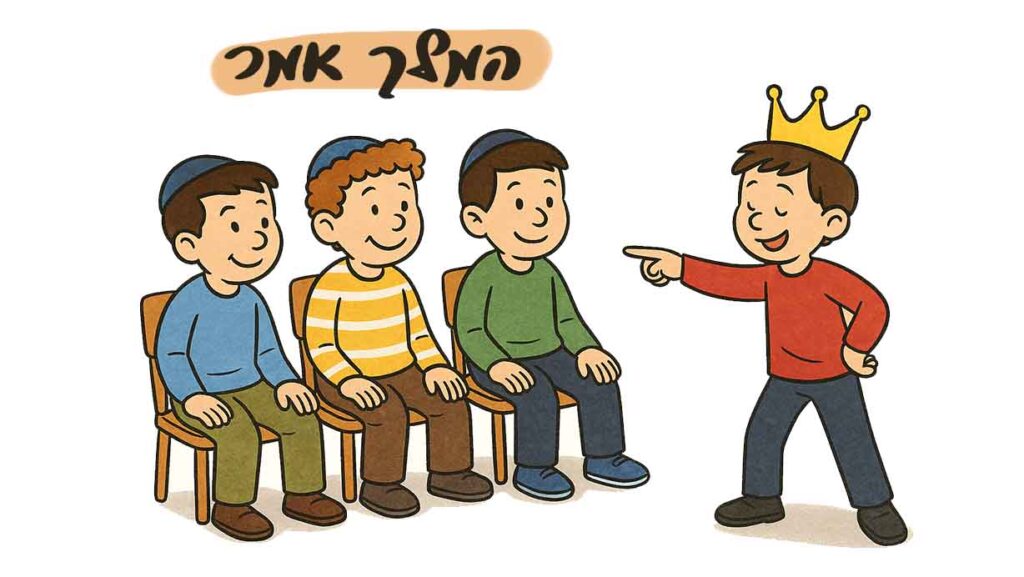
Simon says
What you need: nothing but players 🙂
Learning goals: following instructions, concentration, listening, developing imagination
How to play:
- One player is chosen to be “Simon”.
- All the players must perform the tasks Simon tells them.
- A task is done only if it’s preceded by the words “Simon says”; if not, it must not be done.
- Simon has to try to trick the players. Anyone who gets confused is out.
- After a few rounds, Simon is replaced.
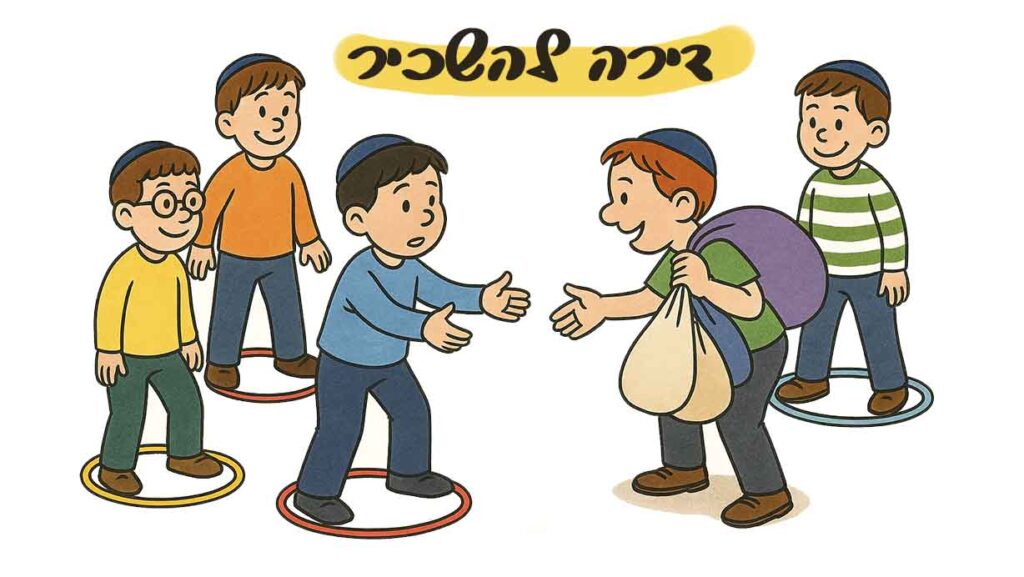
Apartment for rent
What do you need to prepare? Hoops – one fewer than the number of participants
Learning goals: coordination and agility, quick reaction, concentration
How to play:
- Each participant stands inside a hoop. The hoop is called an “apartment”. One participant is left “without an apartment”.
- The participant without an apartment turns to the players and asks: “Do you have an apartment for rent?”
- The player who was asked answers "no," and meanwhile the other players have to swap apartments without the one who has no apartment grabbing theirs.
- A participant who didn’t manage to grab an apartment becomes the one without an apartment and has to look for an apartment to rent.
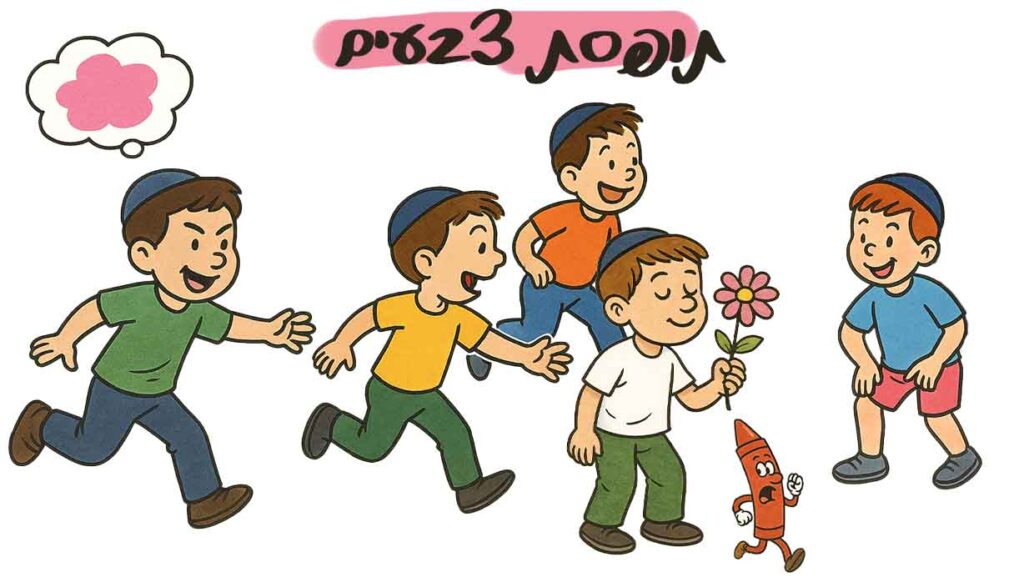
Color tag
What do you need to prepare? An open space
Learning goals: color recognition, agility, speed, listening
How to play:
- One of the players is chosen to be “it”.
- The tagger announces a certain color to the participating players.
- The players must hurry and touch the announced color. That way they’re safe from being caught.
- The tagger tries to catch the players who didn’t manage to touch the announced color.
- The one who’s caught becomes the tagger.
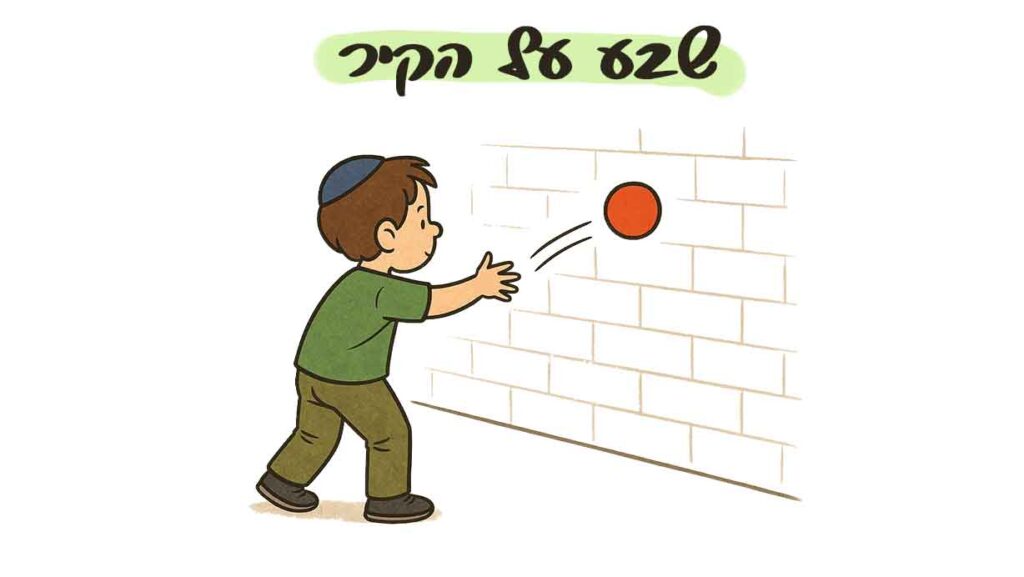
Seven on the wall
What do you need to prepare? A ball, a wall
Learning goals: developing posture and balance, agility, gross motor development, concentration, memory and counting.
How to play:
- Each player in turn performs ball tasks until they’re out. The child who reached the most advanced stage is the winner.
- If everyone played and nobody reached the end of the tasks, play again from the start, each one from the place where they got out.
The tasks:
- 7 ball throws – a simple throw and catch: from a set point, throw the ball at the wall and catch it back.
- 6 throws – throw and catch off the floor: from a set spot a little farther than the previous one, throw the ball at the wall and let it come back to us, bouncing on the floor before we catch it.
- 5 throws – throw and hit: throw the ball at the wall, then right away hit it with your palm while it's in the air and catch it.
- 4 ball throws – throw and hug: from a set point at the wall, hug yourself and catch the ball.
- 3 ball throws – throw and catch with a clap: throw the ball at the wall, clap under your knee and catch the ball.
- 2 throws – throw and clap: throw the ball up, clap under the ball while it's in the air and clap above it as it falls. Then let the ball drop to the floor and catch it right away.
- 1 throw – throw and catch with a spin: throw the ball at the wall, spin around once, let the ball drop to the floor and catch it.
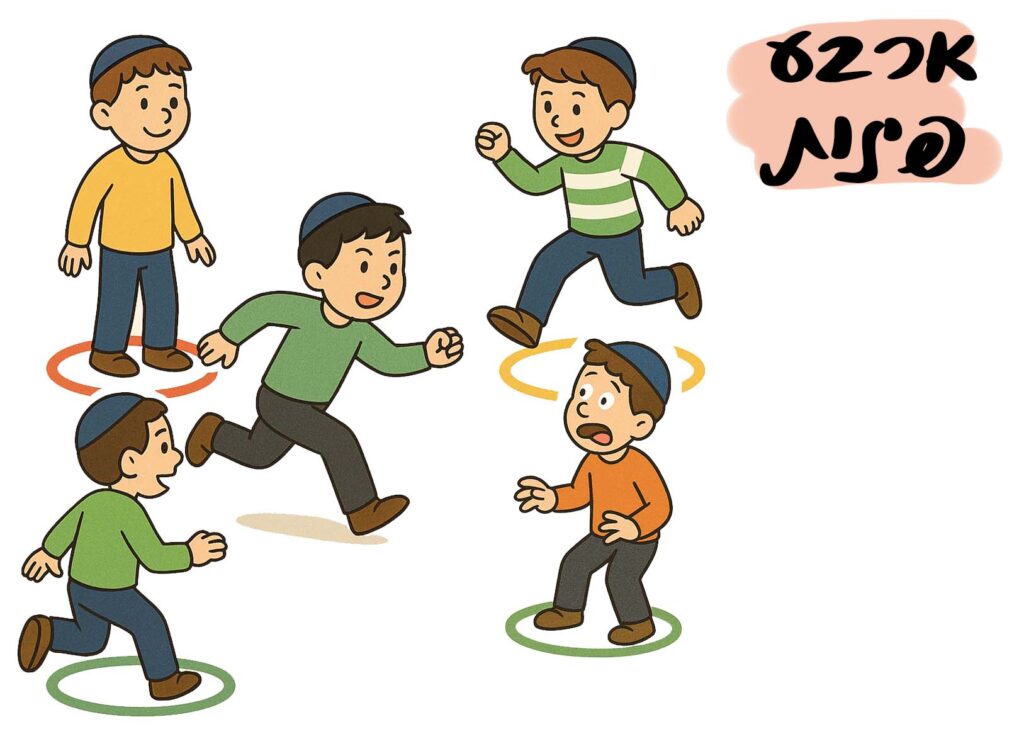
Four corners
What do you need to prepare? A defined space with four corners (for example: a room, a yard with trees or posts, or markings on the ground).
Number of players: 5
Learning goals: agility and quick reaction, coordination, concentration and alertness, basic planning and strategy, spatial awareness.
How to play:
- Four players each stand in a defined corner.
- A fifth player is chosen to be the tagger and stands in the center of the space.
- The players in the corners try to switch places with each other by running.
- While they’re switching places, the tagger in the middle tries to grab one of the corners that becomes free.
- If the catcher manages to reach a free corner before one of the other corner players grabs it, the player left without a corner becomes the new "catcher."
Options for playing with more than five participants:
- You can decide to have two or more catchers in the middle of the space – this makes it harder for the corner players, who have to dodge more than one catcher and find the right moment to switch places.
- Taking turns among the center players:
Four players are in the corners. All the other players wait in line, outside the corners.
When the catcher manages to grab a corner, the player left without a corner becomes the catcher, while the previous catcher goes back to the waiting line in the middle, or simply becomes one of the four new corner players. - Adding new corners: if you have a big space with more than four natural corners (like posts or trees), you can expand the game to match the number of corners.
Do you have a favorite childhood game that's not on the list? Share it with us in the comments!
To sum up, games are a precious gift we can give our children. They help them grow, learn and develop their personality. So let's go back to childhood and share our wonderful play experiences with our children.