 Sign in
The guide to making up, or: how to resolve conflicts
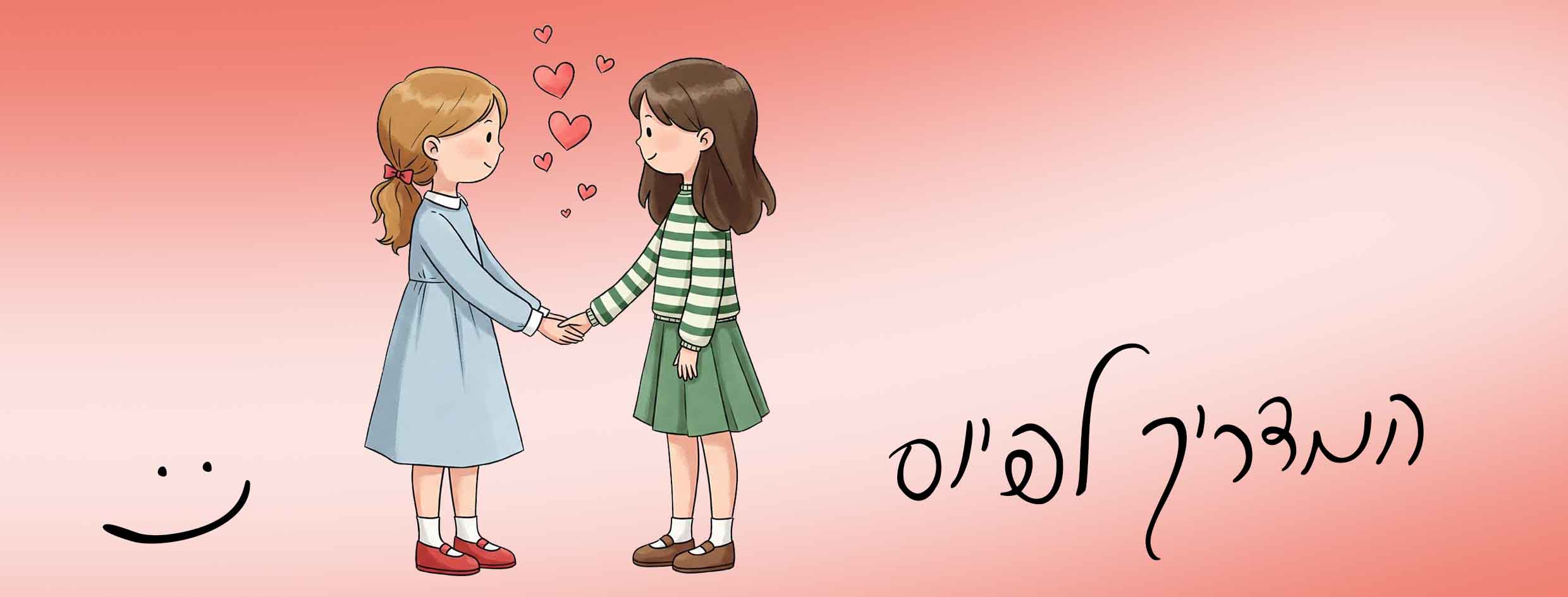
Let's talk about those moments in preschool – yes, the ones that happen twice a day, if not more 🙂
Two children fighting over a doll, a game, or even over who was first. Nothing new, right? But that's exactly the golden opportunity to teach them how to resolve a conflict – not just to get through it in one piece, but to grow stronger from it.
So what do we do? Here are a few simple ideas that make a huge difference:
First of all – take a breath
Before we start "solving," let's take a breath together with them. When everything is still stormy – crying, shouting, frustration – it's hard to listen. For us and for them. So you can say:
"Let's calm down for a moment so we can understand what happened."
Only when the heart calms down can the mind really listen.
Then – listen. Really listen.
Many times, when a child starts telling what happened, he doesn't quite know how. The story comes out jumbled, with no beginning, middle or end, and it's frustrating – for him and for us.
So you can help him put things in order, without jumping to conclusions:
"Okay, wait, something happened. Tell me what the first thing was, and then what happened next…"
And remind the other child:
"Now it's your turn to listen. Afterwards you'll get to tell your side too."
"Try to tell me what your friend said"
Want the children to learn to truly understand each other? Let them practice empathy:
After each one has told their side, you can ask:
"Can you try to tell me what your friend felt or wanted?"
It's a magic exercise – it helps them step outside themselves for a moment and look from the other side.
"So what's actually the problem here?"
After listening, we put the real problem into words together – not just "he took it from me," but maybe: "I wanted to play with it too," or "I felt he wasn't thinking about me."
When they manage to identify the root – they're already halfway to a solution.
"Do you have an idea how to solve this?"
Instead of pulling a solution "from above," we invite them to think together:
"What do you think could help here? How can we work this out?"
It's amazing to see how the children themselves can come up with creative, cooperative and sometimes truly touching solutions.
"So what did you decide?"
We close the story with a shared agreement – even a small one. And then we remind them:
"You can say sorry, or you can simply say – I'm glad we're playing again."
Because the goal isn't only to settle the fight – it's to build real, understanding and caring relationships.
At the end of the day, it's not just about the game. It's about life.
Through us, these children learn how to deal with conflict, how to communicate, and how to be good friends.
Do you have more ideas or techniques that work in your preschool? Share them with us in the comments – together we're a community that learns, teaches and supports one another.